Practice
How to stop ruminating about a mistake at work: repair, learn, close
How to stop ruminating about a mistake at work: fix what can be fixed, turn 'why did I' into 'how do I', treat yourself as you would a colleague, and know when to get help.

Separate the mistake into what can still be repaired, what you can learn, and what is simply replay. Do the repair as soon as you can, including telling anyone affected, write the lesson down as one concrete step for next time, and treat the leftover loop as rumination rather than responsibility. Speaking to yourself as you would to a colleague who made the same slip makes you more likely to improve, not less.
Key takeaways
- Rumination feels like taking a mistake seriously, but research links it to worse problem-solving, not better.
- 'Why did this happen to me?' questions tend to deepen a low mood after failure; 'how' questions about the next step tend not to.
- In experiments, people who responded to a mistake with self-compassion were more motivated to make amends and to improve.
- A replay that lasts for weeks, comes with guilt and poor concentration, or spills into the rest of life is worth taking to a professional.
Joel sent the wrong price list to a client. It was caught within the hour, the client was gracious, and his manager said “these things happen”. That was on Tuesday. By Thursday he had replayed the moment he pressed send perhaps a hundred times, drafted three more apologies he never sent, and started to wonder whether everyone in the office now saw him as careless.
That loop is rumination: repetitive, mostly self-critical thinking about something that has already happened. It feels like conscience. In practice it rarely fixes anything. This page is about the specific case of a mistake at work, and how to give it a proper ending.
Sort the mistake into three piles
Most of the distress after a mistake comes from treating it as one big lump. It is easier to handle in three parts.
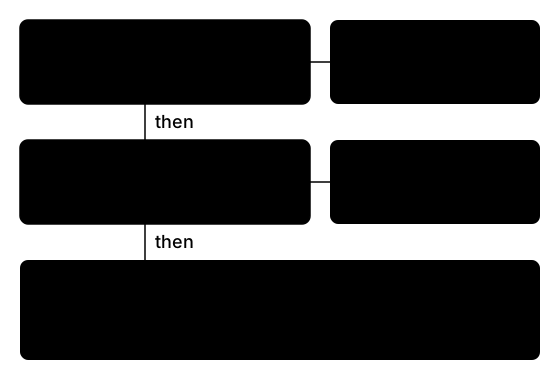
First, what can still be repaired. A wrong figure can be corrected, a missed email answered, a colleague told what happened. Second, what you can learn: one change that makes the same slip less likely. Third, everything else: the replay of the moment, the imagined conversations, the verdicts on your character. Only the first two piles need you.
Repair first, and do it early
Repair is the part rumination quietly avoids. It is often easier to go over a mistake in your head than to walk over to the person it affected.
A good repair is short: what happened, what you have done about it, and what will be different. “I sent last month’s figures in the report. I’ve sent the corrected version to everyone on the list, and I’ve added a check against the source file before anything goes out.” Then stop. One clear account is useful; a stream of apologies keeps the mistake at the centre of the room.
Think of Grace, a junior pharmacist’s assistant who mislabelled a batch of prescriptions that were caught before leaving the shop. She spent the evening dreading the next shift. When she finally told the pharmacist what she thought had gone wrong, he suggested a second check for that step, and the conversation took four minutes. Most of her distress had been about a conversation that had not yet happened.
Replaying is not the same as solving
Rumination disguises itself as diligence. You feel that if you stop thinking about the mistake, you are not taking it seriously.
The evidence points the other way. A widely cited review of rumination research found that it deepens negative thinking, impairs problem-solving and gets in the way of acting on problems (Nolen-Hoeksema et al., Perspectives on Psychological Science, 2008). Repetitive thought itself is not the culprit, though. Psychologist Edward Watkins reviewed the research and concluded that the same habit of going over things can be helpful or harmful depending largely on its style (Watkins, Psychological Bulletin, 2008).
The style that tends to do damage is abstract and evaluative: asking why it happened, what it means, what it says about you. The style that tends to help is concrete: what happened step by step, and how to proceed. In one experiment described in the review, people who wrote about a failure in the “why did you feel this way?” style were in a worse mood hours later than people who wrote about how they felt moment by moment. In another, “why did this problem happen?” prompts made problem-solving worse in people who had recovered from depression, while “how are you deciding what to do next?” prompts helped.
Here is the switch in practice:
- Instead of “Why am I so careless?”, ask “At which exact step did the wrong file get attached?”
- Instead of “What will they think of me now?”, ask “What does my manager need from me this week?”
- Instead of “How could I miss that?”, ask “What check would have caught it, and where does it fit?”
Ahmed, a site engineer, kept circling a measurement error that had cost his team half a day. “Why do I always rush?” went nowhere. “Which measurement do I now double-check, and when?” produced a single line on his checklist, and the circling eased once it had somewhere to land.
Self-compassion is not letting yourself off
Many people fear that being kind to themselves after a mistake will make them sloppy. A set of four experiments tested exactly this. People who were prompted to respond to a weakness or a recent wrongdoing with self-compassion, rather than with a self-esteem boost or nothing, were more motivated to make amends and avoid repeating it, and after failing a difficult test they spent longer studying for the next one (Breines & Chen, Personality and Social Psychology Bulletin, 2012). These were short laboratory experiments, so they show a direction rather than a guarantee, but the direction is clear: harshness is not the engine of improvement many of us assume.
A practical way in is the colleague test. Imagine a colleague you respect made exactly the same slip and came to you upset. Write down what you would actually say to them. It will usually be accurate, specific and forward-looking. Then read it as if it were addressed to you.
Close the file
Once the repair is done and the lesson is written, the mistake needs an ending. A brief, written note works well: what happened, what you fixed, what you will do next time. Three lines, dated, filed away.
When the replay starts again, and it will for a while, notice it and name it: “that’s the price-list loop”. Then return to whatever you were doing. If the thought brings a new, useful action, add it to the note; if not, it belongs in the third pile. The Stoic habit of separating what is up to you from what is not, explained in our page on the dichotomy of control, fits here: other people’s impressions of you are mostly not yours to manage. If the loop mainly shows up when your head hits the pillow, the evening routine in how to stop overthinking at night is built for that.
When it is more than a bad week
Going over a mistake for a day or two is normal. It is worth talking to someone, a trusted colleague, your GP or a therapist, if the replay lasts for weeks, keeps you from sleeping or concentrating, or attaches itself to every new task. Persistent rumination is closely tied to depression and anxiety. The US National Institute of Mental Health lists feelings of guilt or worthlessness and difficulty concentrating among the symptoms of depression, and notes that a diagnosis needs symptoms most of the day, nearly every day, for at least two weeks (NIMH). Our guide to understanding anxiety explains the treatments that help, including talking therapies.
If the distress ever turns into thoughts of harming yourself, use our crisis help page to find someone to talk to straight away.
For most mistakes, though, the path is short: fix what you can, keep one lesson, and let the rest go back to being Tuesday.
The wise move
Open a blank note titled with today's date and the mistake, write three lines (what happened, what I fixed, what I will do next time), save it in a folder called 'Closed', and the next time the replay starts, open the note instead of your memory.
Questions people ask
Should I keep apologising to my manager about the mistake?
One clear apology with what you have done to fix it is useful. Repeated apologies tend to keep the mistake alive for both of you and can read as asking for reassurance. If you are unsure whether it is resolved, ask once whether there is anything else they need from you.
What if nobody else noticed the mistake?
If it affects someone else's work, money or safety, telling them is part of the repair, and it usually costs less early than late. If it truly affects nobody, fix it quietly, note the lesson and let that be the end of it.
Why do I ruminate more about small mistakes than big ones?
Big mistakes usually come with obvious next steps, which gives your mind a job. Small ones often have nothing left to do, so the thinking has nowhere useful to go and simply loops. That is exactly when closing the file matters most.
Sources
- Constructive and unconstructive repetitive thought (Watkins) — Psychological Bulletin, 2008
- Rethinking Rumination (Nolen-Hoeksema, Wisco & Lyubomirsky) — Perspectives on Psychological Science, 2008
- Self-compassion increases self-improvement motivation (Breines & Chen) — Personality and Social Psychology Bulletin, 2012
- Depression — National Institute of Mental Health
This article is general information, not medical advice. Talk to a doctor or qualified professional about your own situation. Read how we work in our editorial standards.
Keep moving
More in Mind →
Anxiety: what it is, what helps, and when to get support
A calm, evidence-based guide to anxiety: why it happens, how ordinary worry differs from an anxiety disorder, what helps day to day, and when to seek support.

The dichotomy of control: stop worrying about what you can't change
Epictetus's oldest piece of advice, explained: how to sort what is up to you from what is not, why it eases worry, and what modern research adds.

How to stop overthinking at night: move the thinking to earlier
Why your mind replays and rehearses at bedtime, and how to stop overthinking at night with a scheduled worry time, a specific to-do list and a plan for in bed.